

MBBS in Kyrgyzstan is an option many Indian students consider when exploring affordable medical education abroad. For students from Kerala, English-medium programmes, international exposure, and manageable tuition fees may make Kyrgyzstan an attractive destination. However, choosing a medical university involves more than comparing fees, campus facilities, and accommodation.
Clinical training and patient communication are two important factors students should examine before admission.
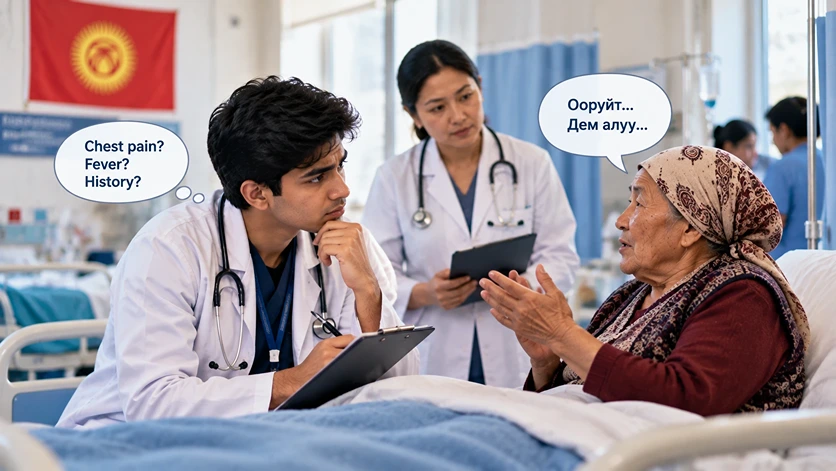
Medical education requires practical learning, supervised hospital experience, and opportunities to interact with real patients. Although medical subjects may be taught in English, patients in Kyrgyzstan often communicate in Kyrgyz or Russian. This language difference can create challenges during hospital postings.
Understanding how universities manage clinical exposure, bedside learning, and language support can help Kerala students make informed decisions about their medical education.
Why Is Clinical Training Important for MBBS Students?
Clinical training connects medical knowledge with real patient care through supervised practical learning.
Clinical training helps students understand how the concepts they study in classrooms are applied in hospitals.
While textbooks explain diseases, symptoms, and treatment methods, hospital learning allows students to observe how doctors examine patients, collect medical histories, and make clinical decisions.
During clinical postings, students may gain experience in departments such as general medicine, surgery, paediatrics, and obstetrics and gynaecology.
Practical exposure can help students develop essential skills, including:
- Understanding patient symptoms and medical histories.
- Observing physical examinations and diagnostic procedures.
- Participating in supervised case discussions.
- Learning professional communication and patient safety practices.
However, hospital attendance alone does not guarantee meaningful clinical education. Students should verify whether their university provides regular bedside teaching, qualified supervision, and structured practical assessments.
Patient Communication Challenges in Kyrgyzstan
English-medium medical education does not guarantee that patients in teaching hospitals will communicate in English.
One of the challenges international medical students may experience in Kyrgyzstan is the language difference between classrooms and hospitals.
According to the Constitution of the Kyrgyz Republic, Kyrgyz is the state language, while Russian is used as an official language.
Many patients visiting local hospitals may communicate in these languages rather than English.
For example, a student from Kerala may understand the medical explanation of chest pain in English but struggle when a patient describes the symptoms in Russian.
This can make patient history-taking, understanding medical concerns, and participating in clinical discussions more difficult.
Effective communication is an essential medical skill. Students need to understand not only medical terminology but also how patients describe their symptoms, pain, and previous illnesses.
Therefore, students should check whether their chosen university provides local-language lessons, bilingual teaching assistance, or appropriate interpretation support during hospital training.
What Should Students Check About Hospital Rotations?
Good hospital rotations require regular clinical exposure, qualified supervision, and meaningful patient learning opportunities.
Hospital rotations allow medical students to observe and learn from different departments as they progress through their course.
However, the quality and structure of these rotations can vary between medical universities.
Before choosing a university, students should understand when clinical postings begin, how often they take place, and what activities students are permitted to perform under supervision.
A well-organised clinical programme may include ward rounds, bedside teaching, case presentations, practical demonstrations, and feedback from clinical teachers.
Students can use the following criteria to compare universities.
| Clinical Factor | What Students Should Verify | Measurement |
|---|---|---|
| Hospital rotations | Official clinical timetable | Hours per week |
| Patient interaction | Supervised bedside learning | Sessions per week |
| Faculty supervision | Availability of clinical instructors | Students per supervisor |
| Language support | Kyrgyz or Russian language classes | Hours per semester |
| Practical assessment | Clinical case evaluations | Assessments per term |
Comparison checklist prepared in October 2026. Actual figures should be requested from each university.
Students should not assume that a large hospital automatically provides better practical education. The opportunity to learn from patients under appropriate supervision is more important than infrastructure alone.
How Can Students Verify Teaching Hospital Quality?
Hospital affiliations should be confirmed through official university records, not promotional claims.
Many medical universities advertise teaching hospitals and clinical partnerships. These arrangements can be valuable, but students should verify whether they provide regular training opportunities.
Before admission, ask the university for the names and locations of affiliated hospitals, the departments available for clinical learning, and the schedule followed by international students.
It is also useful to understand whether students can participate in supervised patient examinations, case discussions, and clinical assessments.
Students can review institutional information through the World Directory of Medical Schools. However, directory listing does not itself confirm accreditation, training quality, or eligibility for medical registration in India.
University accreditation should be checked separately.
In 2026, the Indian Embassy in Bishkek published advisories about medical university accreditation in Kyrgyzstan. Students should consult the latest Embassy of India guidance before selecting an institution.
Why Is Learning Kyrgyz or Russian Useful for Medical Students?
Basic local-language skills can help international students participate more confidently in supervised patient interactions.
Although English-medium instruction may make academic learning easier for Indian students, local-language knowledge can be useful during hospital postings.
Medical students need to understand patient concerns, ask relevant questions, and communicate respectfully.
Learning commonly used medical phrases in Kyrgyz or Russian can help students understand basic conversations related to symptoms, pain, medication, and previous illnesses.
Some universities may include language classes within their curriculum, while others may offer separate training programmes.
Students should check whether the university provides medical vocabulary lessons, communication practice, and suitable assistance during clinical postings.
Basic language knowledge is helpful, but complex medical communication may still require qualified interpretation or supervision to protect patient safety.
What Are the NMC Requirements for MBBS in Kyrgyzstan?
Indian students must verify whether their chosen medical programme meets the applicable National Medical Commission requirements.
Students planning to return to India for medical practice must understand the rules established by the National Medical Commission (NMC).
Under the Foreign Medical Graduate Licentiate Regulations, 2021, standard requirements for students covered by these regulations include a medical course of at least 54 months, a minimum 12-month internship at the same foreign medical institution, English-medium instruction, and the required subjects and clinical training.
Graduates must also meet applicable licensing examination, internship, and registration conditions before practising medicine in India.
Students should verify the complete course structure rather than assuming that a university automatically satisfies these rules.
Keeping proper records of hospital rotations, clinical attendance, examinations, and internships is also important.
Because medical education regulations and university accreditation arrangements may change, students should check current official information before admission.
Common Mistakes Students Should Avoid
Choosing a university based only on tuition fees or advertising may overlook important clinical education requirements.
One common mistake is selecting a medical university mainly because it offers lower fees or modern campus facilities.
Affordability matters, especially for families planning education expenses over several years. However, academic quality and future career requirements are equally important.
Students should avoid assuming that English-medium teaching guarantees English-speaking patients or that advertised hospital partnerships automatically provide adequate clinical exposure.
Another mistake is relying only on admission counsellors without checking information directly with universities.
For example, a student from Malappuram comparing two Kyrgyz universities should request written clinical schedules and hospital details from both institutions before deciding. This hypothetical comparison illustrates why practical training information matters alongside costs.
Students should also be cautious about unsupported claims of guaranteed medical registration in India.
Important Questions to Ask Before Admission
Clear answers about clinical exposure, hospital affiliations, and language support help students evaluate their medical education options.
Before finalising a university, Kerala students and parents should ask:
- Which hospitals provide clinical training, and are the affiliations currently valid?
- From which academic year do hospital postings begin?
- Do students receive supervised opportunities to interact with patients?
- Are bedside teaching and case discussions included in the curriculum?
- What languages are commonly spoken by patients?
- Does the university provide Kyrgyz or Russian language training?
- How are practical clinical skills assessed?
- Does the course and internship structure meet the applicable NMC requirements?
Students should request written documentation wherever possible rather than relying entirely on verbal assurances.
Clinical Training and Admission Checklists
Simple verification steps can help students compare universities more carefully before admission.
Clinical Training Checklist
- Verify the university’s teaching hospitals and clinical schedule.
- Confirm supervised patient interaction and practical assessments.
- Check the complete internship structure.
Keep: Official timetables, hospital details, and written university confirmations.
Patient Communication Checklist
- Identify the languages commonly used in teaching hospitals.
- Check for local-language classes and medical vocabulary training.
- Ask how international students receive communication support.
Keep: Language course details and university responses.
Frequently Asked Questions
Medical programmes in Kyrgyzstan may include supervised hospital rotations and practical clinical education. However, the quality and structure of training depend on the university and its hospital arrangements.
English may support academic learning, but communicating with patients can be challenging when they speak Kyrgyz or Russian. Learning basic local-language skills can be helpful during hospital postings.
Patient interaction opportunities depend on the university’s clinical programme, hospital policies, supervision, and patient consent. Students should confirm these arrangements before admission.
Students can check affiliated hospital details, clinical schedules, teaching supervision, practical assessment methods, and feedback from current senior students.
Graduates must satisfy the applicable NMC educational, licensing examination, internship, and registration requirements before practising medicine in India.
MBBS in Kyrgyzstan may be a suitable option to explore for Kerala students considering medical education abroad. However, clinical training, patient communication, and hospital exposure should be important factors when choosing a university.
English-medium teaching can make classroom learning accessible, but students should prepare for possible language barriers during hospital postings.
Before admission, families should verify teaching hospital arrangements, supervised clinical exposure, local-language support, university accreditation, and applicable NMC requirements.
For students and parents seeking guidance on comparing medical universities and understanding admission requirements, Help Abroad Consultancy provides information about medical education abroad.
Students can also explore its guide to MBBS abroad planning for Kerala students.
A good medical education decision should focus not only on affordable fees but also on the clinical experience and communication skills students need for their future careers.
Planning to Study MBBS in Kyrgyzstan?
Choosing the right medical university involves more than affordable tuition fees. Understanding clinical training, hospital exposure, patient communication, and NMC requirements is equally important.
Help Abroad Consultancy helps Kerala students explore medical university options and make informed admission decisions.
Get Expert Guidance →